These are the 15 toughest stages on the entire Trans Dinarica
We probably should have written this article back in 2024. It would have spared quite a few people some swearing. No, we never said the Trans Dinarica was a piece of cake, but the mountains are exactly what make it so wonderful. We’ve picked the stages that we, and you, consider the toughest. Keep in mind that “difficulty” means different things: a road can be hard because of a bad surface, because of the gradient or because of sheer length. When all of that comes together, it’s really hard.
We don’t want to scare you off. We do want you to be prepared and, where possible, to adjust the route to your abilities if you need to.
Note: the stages are not ranked by difficulty. They follow the original direction of the route, starting in Slovenia.
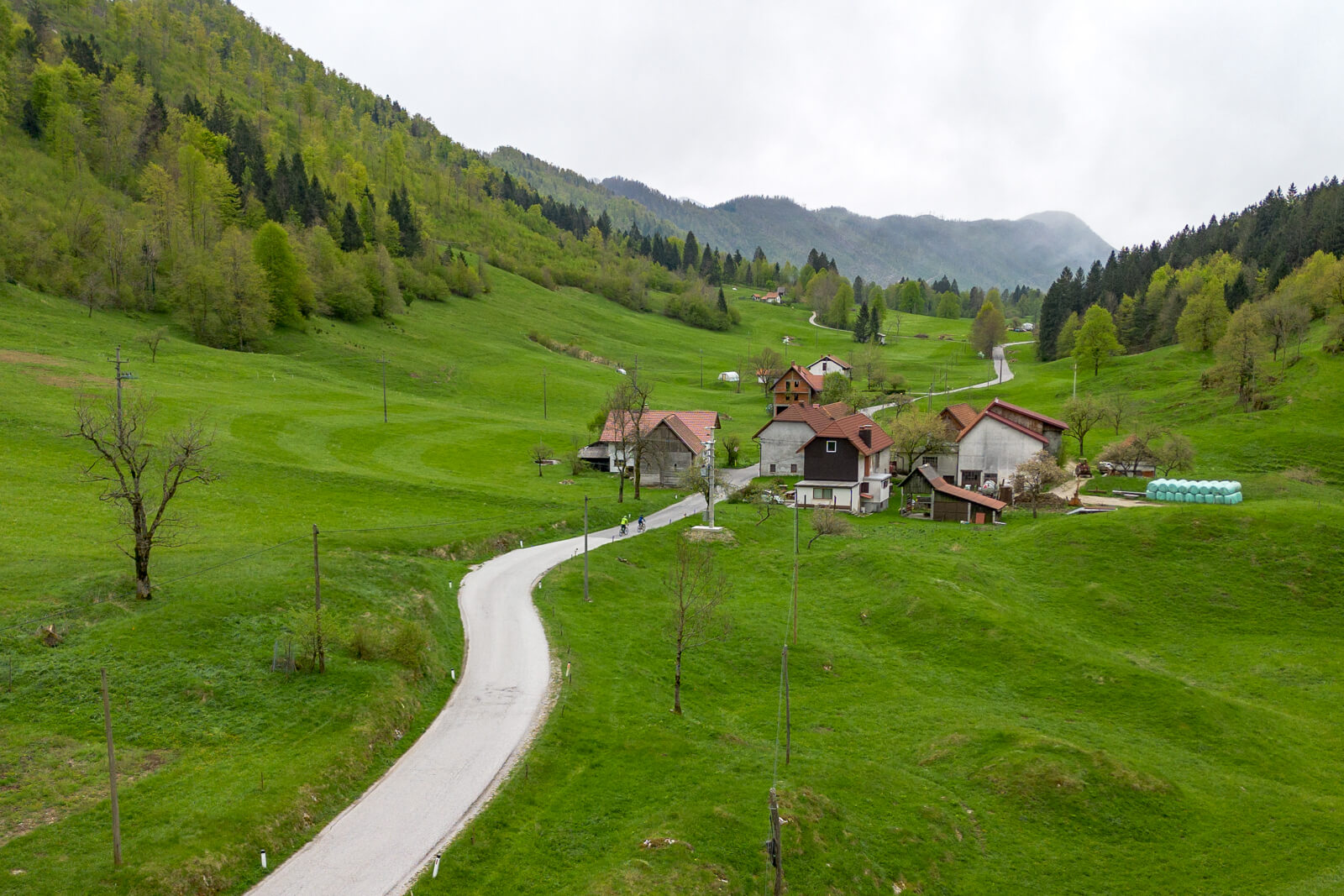
1. Tolmin – Sinji Vrh, Slovenia – Stage 5, secondary route (45 km, 1,430 m)
Slovenia is probably the easiest of all the countries, but that doesn’t mean it’s easy. This stage on the secondary route isn’t demanding in terms of surface, but the climb from Most na Soči (along the Idrijca River) to the area below Mali Golak, where the route goes above 1,200 metres, just never ends. You’ll gain a solid thousand metres in just over 20 kilometres! If you’re riding in early spring or late autumn, check the local weather forecast twice so the cold, or even snow, doesn’t catch you off guard.
Slovenia has a few more short but very demanding sections, such as the steep asphalt climb at km 10 of the first stage and the gravel climb at km 12 of the second. You see, we didn’t want the start of the Trans Dinarica to promise too leisurely a ride 😉
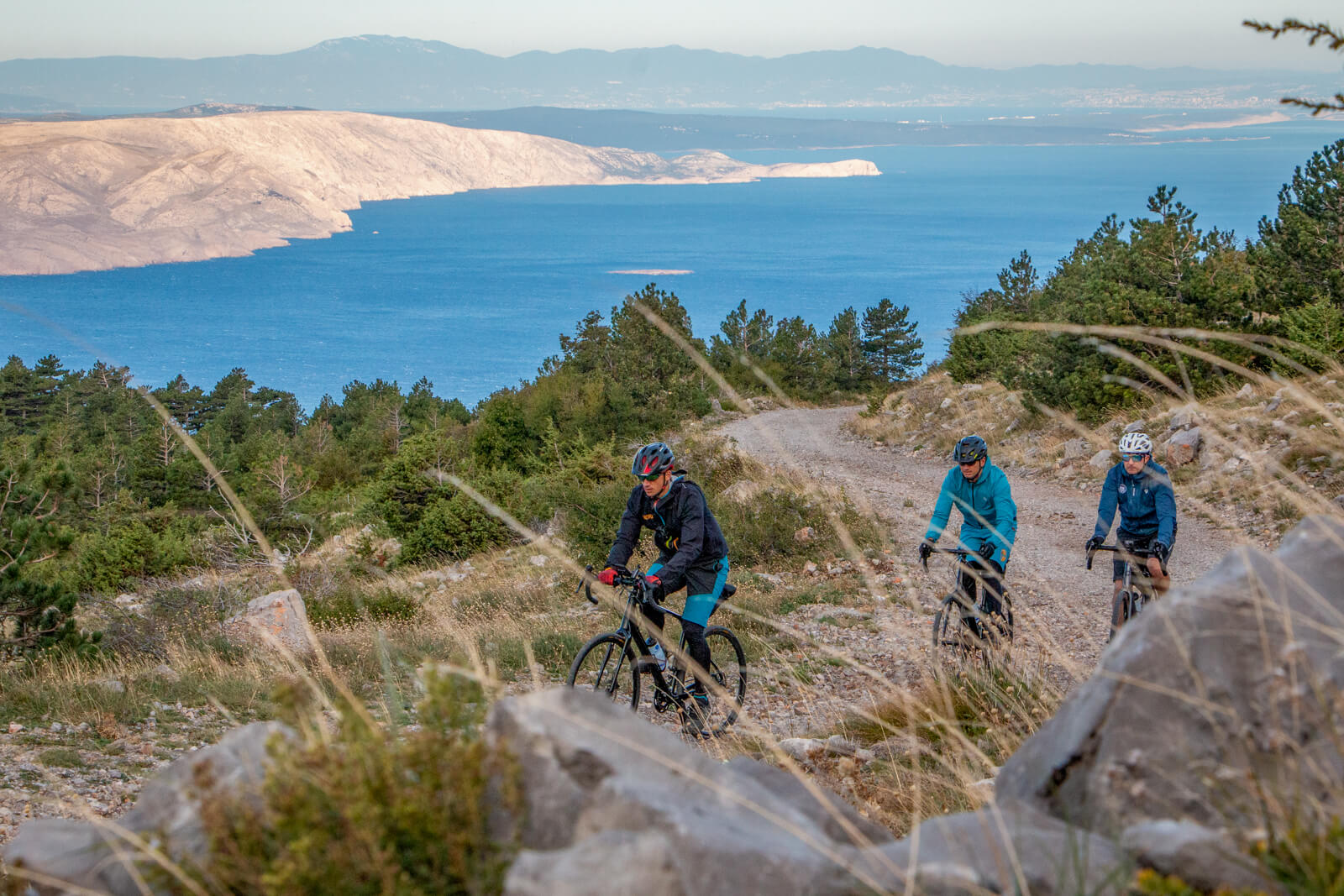
2. Senj – Krasno, Croatia – Stage 3 (30 km, 1,190 m)
Yes, you slept on the Adriatic coast, but now it’s time to pay the price: the finish is a little village in the heart of Velebit! Right after the start the asphalt road stands straight up, and the climb doesn’t let go until around km 25. There’s quite a bit of gravel along the way, which may force those with heavily loaded bikes to get off and push. That has its upside too: more time to take in the truly stunning views on your right, towards the islands bathing in the sea below you. And another warning: you don’t want to be on this section during a strong bura wind (mostly in spring and autumn, but it can happen in summer too). If the main coastal road is closed to motorbikes, buses and trucks, expect a hell of a wind up here as well. Adjust your travel plans.
The next stage in Croatia, stage 4, isn’t easy either, but most of the climbs are on asphalt, and the gravel is compacted and friendlier to bike travellers. Compared to the other countries, the rest of Croatia is relatively (relatively!) easy.
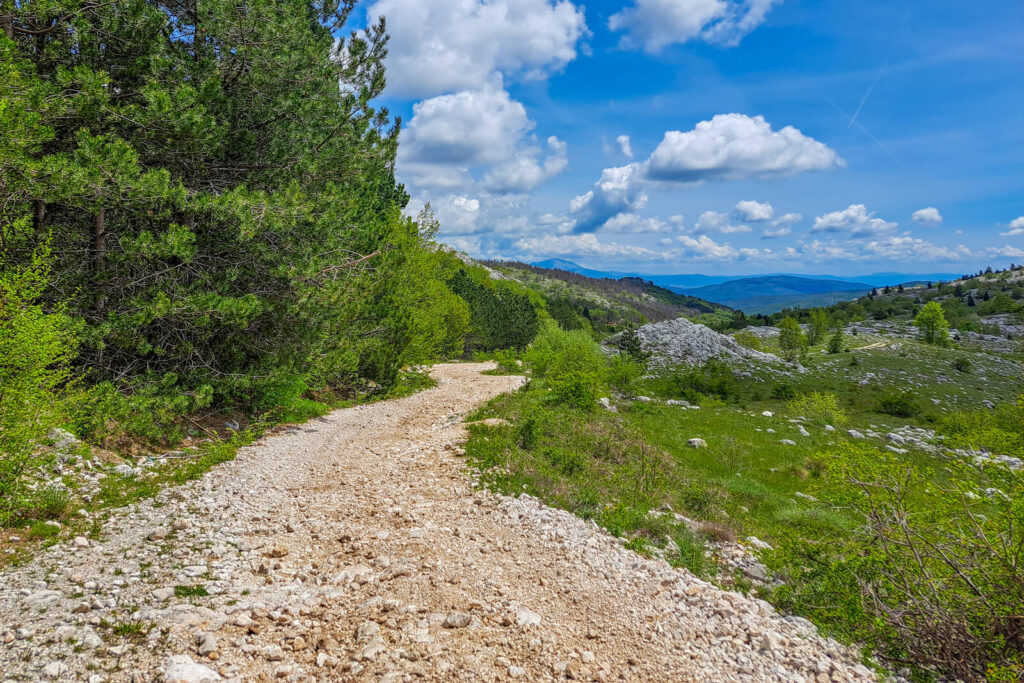
3. Tomislavgrad – Mostar, Bosnia and Herzegovina – Stage 2 (78 km, 920 m)
Many people say this is the toughest stage on the Trans Dinarica. And if you tackle it in the opposite direction, from Mostar, you’ll definitely be pushing on the gravel climb. So, sticking with the “right direction”: up to Blidinje Lake (approx. 30 km) everything is fine and dandy (asphalt). Then the gravel section begins. At first it’s fairly well compacted, but after km 45 it starts to descend, and for about 6 kilometres the surface is very… bad. Those of you on MTBs or hardtails might be whooping with joy, while those on gravel bikes with narrower tyres will be cursing their choices. But look at it from the other side: plenty of people have told us this is one of the most beautiful stages on the whole route. Wild. Raw. Long stretches far from any sign of civilisation. Be prepared.
4. Boračko Lake – Tušila, Bosnia and Herzegovina – Stage 4 (44 km, 1,590 m)
We weren’t sure whether to include the stage from Mostar to Boračko Lake as well. We didn’t, because otherwise people would get scared of Bosnia and Herzegovina, which doesn’t really have an easy stage. This one, starting at idyllic Boračko Lake tucked beneath Mount Prenj, is hard because of a climb that just doesn’t stop. The first 16 kilometres along the Neretva are fairly flat, and then: climbing, 30 kilometres of climbing without a break. The upside: it’s all paved. Start early and carry plenty of water or energy drinks, because you’ll need them. When it gets really tough, think of the alternative: the main road from Mostar to Sarajevo, where trucks and buses would be overtaking you (on climbs too). Breathing the fresh air of Mount Visočica is much better.

5. Žabljak – Kolašin, Montenegro – Stage 3 (70 km, 1,060 m)
The upside: the hard part (OK, the two hard parts) is relatively short. The first is a hellishly steep climb from km 37 onwards (about 3 kilometres). Then the road levels out and turns to gravel (fairly well compacted). The second hard part is the descent towards Lipovo: gravel, steep, and you have to pick your line carefully. By now you probably know your brakes need to be in perfect shape. One more thing: skip this stage (or wait for better conditions) if the weather is bad. Up there on Mount Sinjajevina, you don’t want to be caught in a (snow)storm. One more idea: right at the top there’s a small shepherd’s hut where you can stay overnight in season. There aren’t many chances to sleep (safely and legally) at 1,700+ metres above sea level!
6. Tamarë – Bogë, Albania – Stage 12, alternative route (54 km, 1,340 m)
This fully paved stage is hard mostly when the sun is blazing. Two long climbs await you: first up the truly epic Leqet e Hotit pass on the SH20 road, and then a roughly 33-kilometre (gentler) climb to the village of Bogë. So if the forecast says hot, start pedalling at sunrise. You’re welcome; you can thank us some other time.
7. Theth – Mali i Shoshit Pass, Albania – Stage 14, alternative route (30 km, 960 m)
The road has been improved since our research trip, and now it’s waiting to be paved with asphalt (don’t ask when). We consider this stage hard mainly because many cyclists ride it all the way to Shkodër in one day, since the campsite at the top of the pass is very… basic. When it’s open. In that case you’re in for an 80-kilometre epic adventure, mostly on gravel (for now).
8. Kukës – Matranxh, Albania – Stage 7 (36 km, 1,310 m)
As in most of Albania, the problem isn’t the surface (whatever isn’t paved yet will be sooner or later), but climbs that just don’t stop. The stage from Kukës starts calmly, but after 10 kilometres it begins to climb. Don’t let the descent in the last third get your hopes up: the final climb, about 7 kilometres long, repeatedly kicks up past 10 percent. Stage 5 offers a similar amount of climbing (1,410 m over 77 km) up to around km 30, but the climb there is a bit kinder to the legs.
9. Kičevo – Galičnik – Mavrovo, North Macedonia – Stage 8, secondary route (68 km, 2,020 m)
We recommend this stage for two reasons. First, because the vast wilderness up there is absolutely mind-blowing. Second, because the main route along the main road can be very busy and unpleasant. But let’s add two “ifs” to those two reasons. First, that you’re able to push the pedals uphill on bad gravel. Second, that the weather allows it. Even a sunny day after rain can be a problem because of the mud. But whoever rides it in good conditions definitely won’t regret it. One more note: you can skip the detour to the village of Galičnik (at the end of the world) by descending directly to Mavrovo, which saves you 20 kilometres (though it’s a shame to miss it).
10. Mavrovo – Popova Šapka, North Macedonia – Stage 9, secondary route (96 km, 2,210 m)
We only recommend this stage, or rather these two stages, to riders in good physical shape and on the right bikes (if we could choose, we’d take a full-suspension cross-country bike). It’s probably the wildest section of the entire Trans Dinarica, because of its length, the share of gravel, the quality of that gravel, the altitude (weather!) and the distance from civilisation. The numbers speak for themselves. Brutal, but also brutally beautiful. Either way, it’s completely different from the classic stage from Mavrovo to Tetovo, which is easy both because of the elevation profile (mostly downhill) and the urban surroundings from Vrutok onwards. On this stage, that quote from Trainspotting about life choices will creep into your mind. Well, you clearly chose adventure on a bike.
11. Novi Pazar – Sjenica, Serbia – Stage 3 (71 km, 1,440 m) + Sjenica – Molitva shortcut (15 km, 470 m)
This is one of the longer stages on the Trans Dinarica. The Pešter Plateau is, well, a plateau, but that doesn’t mean the top is flat as a table. You’ll rack up more than 1,400 metres of climbing, partly on gravel. In the same breath (and the same point), let’s mention the “shortcut” the next day, right after you leave Sjenica. True, it’s only 15 kilometres long, but the last part is more hiking than biking. So if you’re carrying heavy bags or riding a heavy e-bike, we recommend staying on the main route and reaching the Molitva viewpoint above the Uvac Canyon from the north side.
12. Zlatibor – Mitrovac (Tara), Serbia – Stage 7 (54 km, 1,440 m)
Two tough sections await you on this stage: first a pretty wild gravel descent almost all the way to Mokra Gora, and then a fairly steep asphalt climb of about 10 kilometres. Tip 1: there’s a fully paved alternative. Tip 2: there’s nothing wrong with finding a place to stay in Mokra Gora. Kusturica’s Drvengrad, or Küstendorf, built as a set for the film Life Is a Miracle, is a really great spot for a homemade coffee (or something stronger).
13. Klotjevac – Han Pijesak, Bosnia and Herzegovina – Stage 8 (63 km, 1,940 m)
Here’s another stage that will get you reflecting on your life decisions. And that starts right after you leave the banks of the Drina River (Perućac Lake), most likely while pushing your bike up a bad, steep gravel climb. Good news: this worst part is “only” 4 kilometres long. Bad news: that’s not the end of the climbing; this stage adds up to more than 1,900 metres in total. Good news: the remaining kilometres aren’t as hard as those first 4. If you know that, carry enough fluids and snacks for the day (don’t expect a shopping mall in Han Pijesak either), and love wild forests, you’ll have a great time.