A father-and-son Trans Dinarica ride from Venice to Skopje
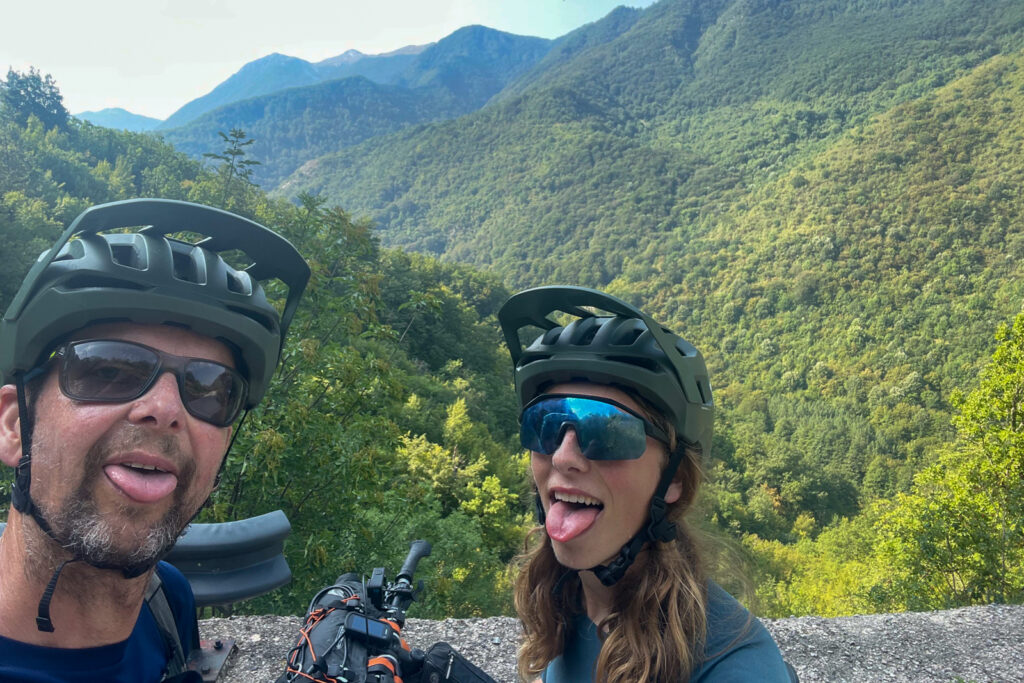
We absolutely love your stories. This one comes from a father and son who showcase a fantastic way to spend time together. Discover their journey—from route adjustments and the twists and turns along the way to the bikes and gear they used. Yes, gravel bikes aren’t the only option for the Trans Dinarica; a hardtail is a great choice, especially when tackling challenging gravel sections. Christoph & Ole—on behalf of our team and all the fathers and sons just discovering the joy of this kind of bonding—a huge thank you!
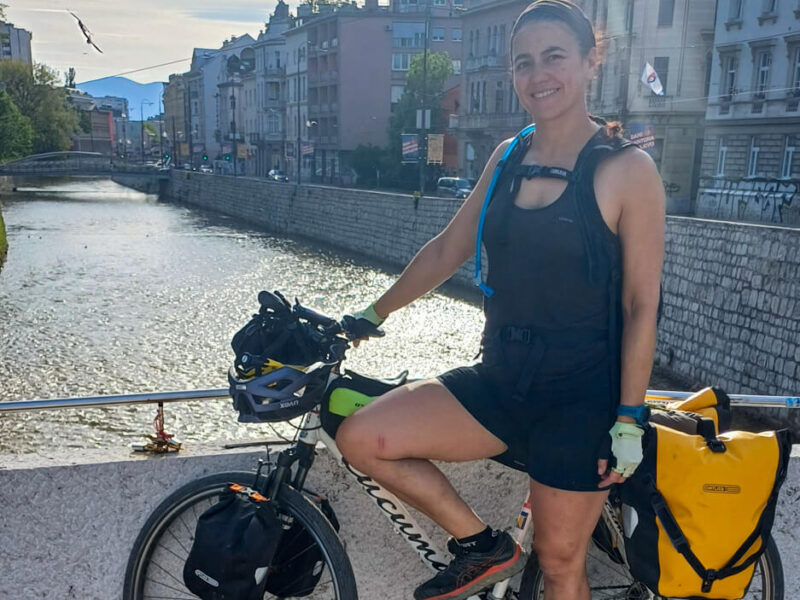
There are probably easier ways to spend the summer than cycling from Italy to North Macedonia on two fully loaded hardtails. My father and I set off on 20 July 2025 from Kiel (very north of Germany) and flew home from Skopje on 11 September: about 2,500 km and 36,000 metres of climbing in eight weeks. We took the train to Venice, followed the Adriatic coast into Slovenia and rode the Trans Dinarica GPX tracks from there, leaving out Kosovo and Serbia.
We did not know how often we would wonder why we had thought this was a good idea. Nor how often, a few hours later, we would already be glad we had.
Italy and Slovenia: the first lessons
Our first day was planned as 55 km from Cavallino-Treporti towards Caorle. After a wrong turn and a badly chosen detour, it became almost 140 km to Lignano. We arrived completely exhausted, found an expensive all-inclusive campsite and spent the night massaging my father’s cramps. Then a huge thunderstorm hit. We lay in the tent wondering whether the wind would take it away, and went outside twice to secure it and tighten the guy lines.
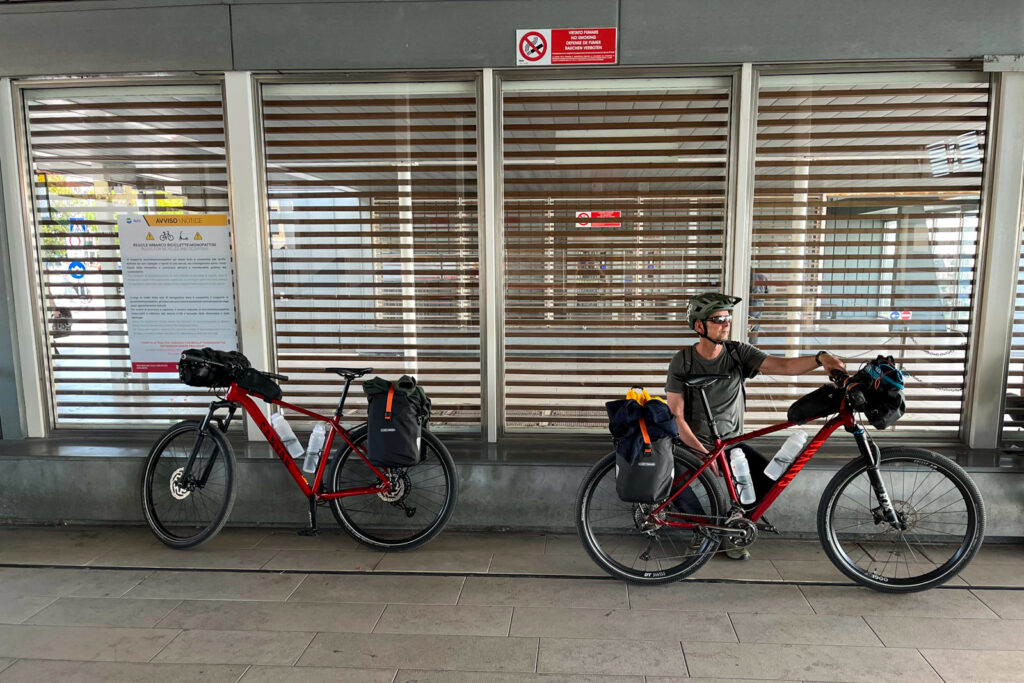
Slovenia changed the picture. Past Sežana the road began to climb, and the trip finally felt like the adventure we had imagined. There was just one problem: it was Sunday, and almost every supermarket was closed. We found two Cokes and a few pieces of pizza at a kiosk, and by the time we reached Matavun we were hungry, tired and looking for somewhere, anywhere, to sleep. Pizza, a tent and sleep. Sometimes that is all you need.
Croatia: beautiful, hot and occasionally confusing
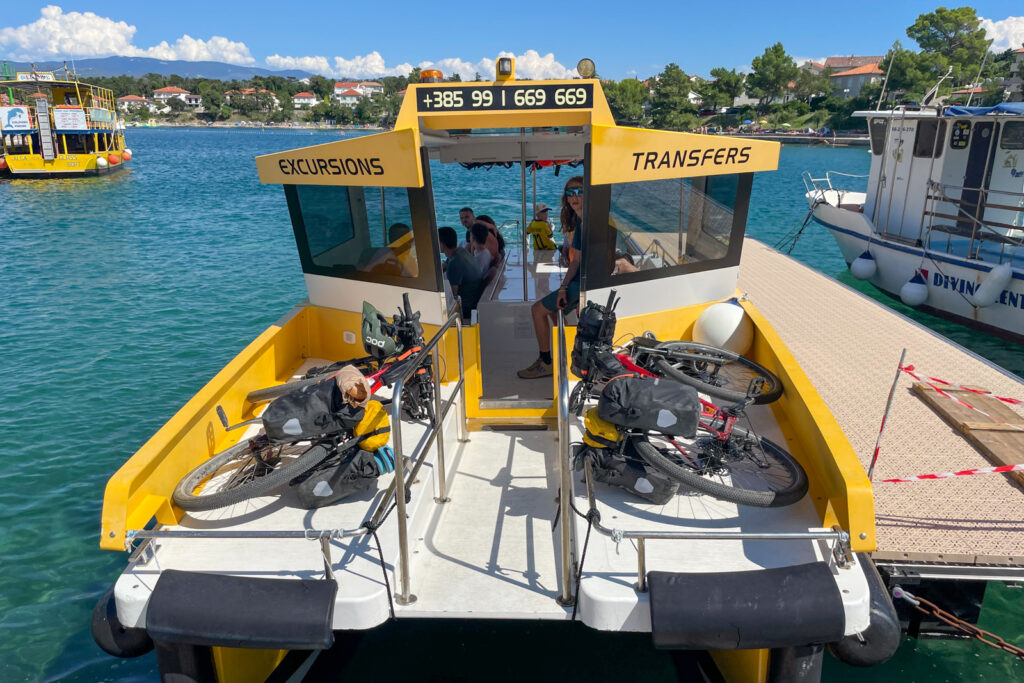
From Ilirska Bistrica we crossed into Croatia and rode via Čavle to the coast, with a detour to the island of Krk and a ferry to Selce. We followed the Adriatic for stretches, but the route never stayed beside the sea for long. Again and again it sent us inland and uphill, through landscapes that looked almost unreal in the summer heat, with mountains behind us and the sea appearing between them.
After Senj and Rtina we reached a small meadow directly beside the Zrmanja river. We were exhausted but had found exactly the kind of place we had been hoping for. We swam, admired a nearby waterfall and ate dinner at the local restaurant. The next day we headed towards Knin, and then came another day of climbing, and another. At some point we stopped asking whether there would be another climb and simply accepted that there would be.
Bosnia and Herzegovina: this is getting serious
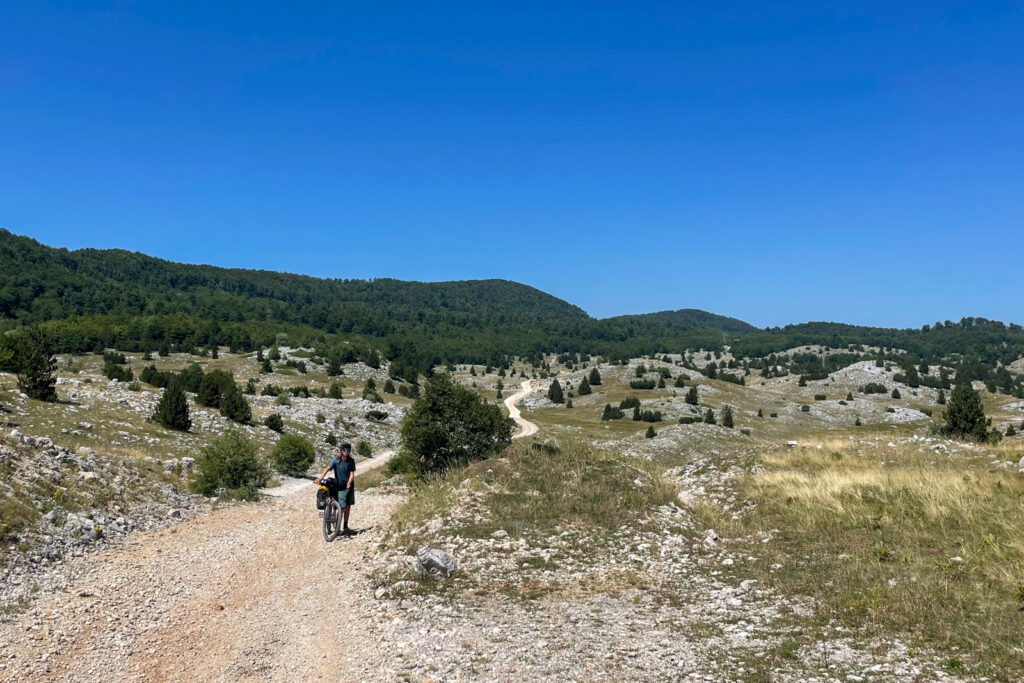
In Bosnia and Herzegovina the route led us via Livno and Mostar. The mountains became bigger, the roads rougher and the surroundings wilder. On one particularly difficult day we climbed towards Blidinje Lake, and the route took us off the main road onto a long, rocky off-road section. Eventually we met Udo, another German bikepacker who was also riding parts of the Trans Dinarica. Meeting another cyclist in the middle of nowhere made the route feel like a shared adventure rather than just our own trip. We continued through the mountains, sometimes riding, sometimes pushing, and sometimes simply trying to keep the bikes under control on loose gravel.
At Boračko Lake we took a whole day off, swam, sat in the sun and met Udo again. The next day the route climbed again, and we met three cyclists from Hamburg who had been carrying their bikes up for a while and looked just as tired as we felt. That was strangely comforting. Sometimes it is enough to see somebody else pushing their bike up. One of them, Tammo, we met again in Montenegro, and we ended up riding together for a week.
Montenegro and Albania: long climbs, short conversations
Montenegro was spectacular and not interested in making things easy. The climbs were long and the heat was strong. But the landscape from Trsa to Žabljak and through Durmitor National Park was so fantastic that the effort hardly mattered. It was some of the most beautiful scenery of the whole trip. Still, there were moments when we had to concentrate on one thing only: the next few hundred metres. Riding with someone you know this well saves a lot of words. Nobody has to explain that they are tired. A look, a drink, and then: “Come on.”
In Albania we rode from Shkodra to the reservoir and took the ferry to Fierzë. It left about an hour late, but nobody seemed worried. People danced to Albanian music on board while we sat with our bikes and watched the landscape pass by. It was one of those moments when you stop thinking about kilometres and schedules. You are simply there.
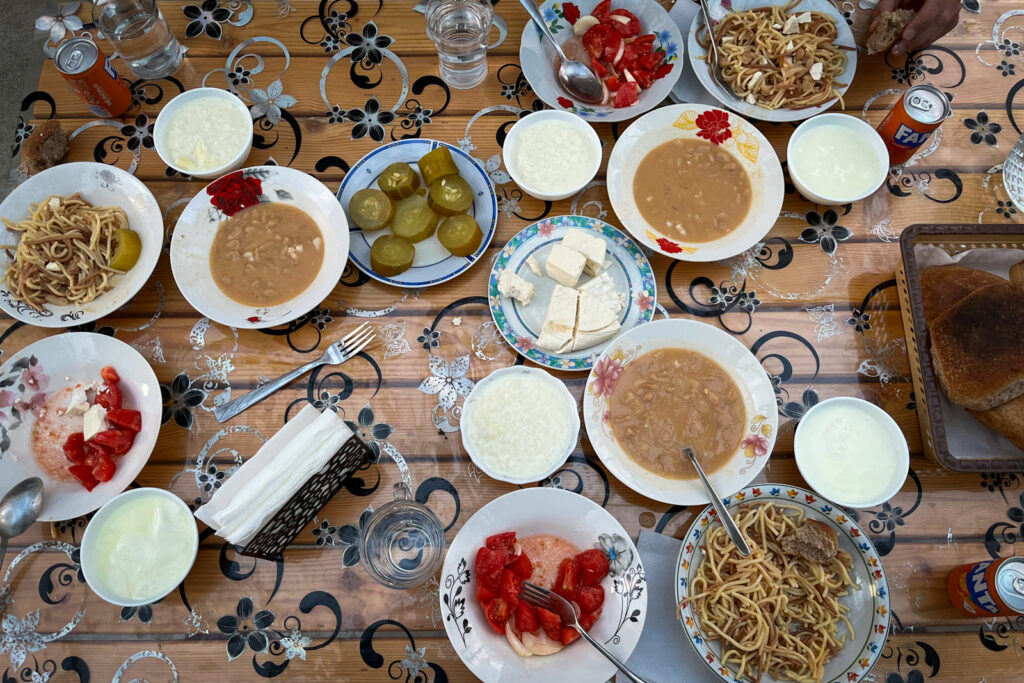
Between Krumë and Kukës, in the middle of the countryside, we stayed with Hasan, who has built up a small campsite and hotel there. From there we rode on via Peshkopi and Librazhd to Lake Ohrid. The roads were rough, we camped most nights, and there was almost always delicious food.
North Macedonia: the last stretch
From Lake Ohrid we rode to Bitola. We took a rest day the way it should be done: feet up, eating a lot, doing nothing. Then we rode via Kruševo to Kičevo, where we met Ramsan. He invited us for a coffee and, despite his obvious poverty, offered us a place to sleep. For us it was another reminder that the most memorable parts of a bike trip are often not the famous viewpoints. They are people.
On the road towards Mavrovo we passed through beautiful landscapes and spent another quiet day at Lake Mavrovo. On 8 September we rode the final stage from Tetovo to Skopje, along a cycle path by the river directly into the centre. We were both a little sad. For the first time in eight weeks, we knew there would be no next stage: no need to check the elevation profile, no need to search for a campsite, no need to ask how much food was left. We spent a few slow days in the city, bought cardboard boxes for the bikes and flew home.
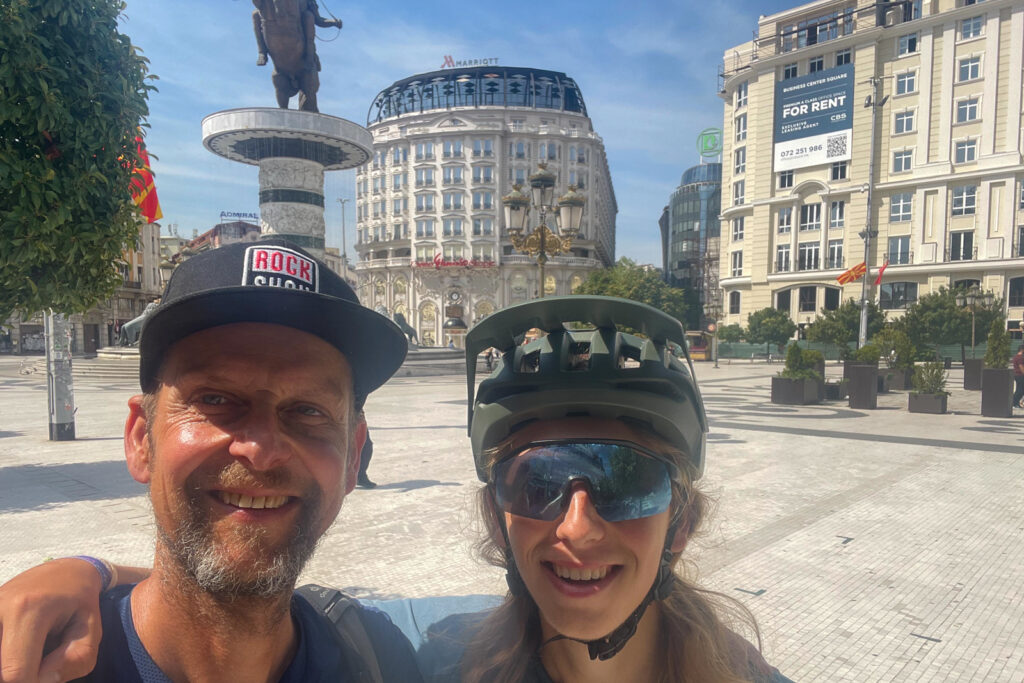
We started with two hardtails and a plan to cross the Balkans. We finished with two tired bikes, a lot of memories, and the slightly uncomfortable feeling that the journey had ended too soon.
Bikes & gear
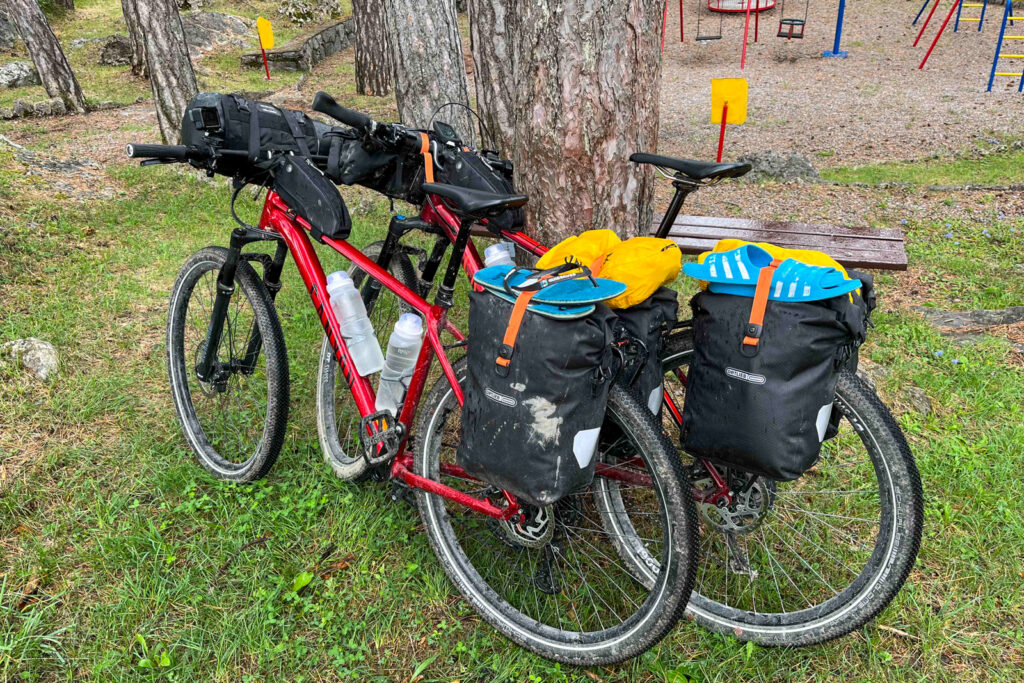
- Bikes: two Canyon Grand Canyon hardtails, one with 2×11, one with 1×12 drivetrain, about 13 kg each
- Tires: Schwalbe G-One with puncture protection, tubeless, not a single flat
- Luggage: about 14 kg each, including tent and sleeping bags, excluding water. Rear rack with two small Ortlieb panniers, one Ortlieb handlebar roll and one no-name waterproof handlebar roll, top-tube bag for small items. Home-bent stainless-steel U-brackets as spacers keep the brake lines running freely.
- Camping: two-person tent, summer sleeping bags with liners, inflatable sleeping mats, small gas stove
- Clothing & first aid: a few T-shirts, two padded cycling shorts, casual trousers, three pairs of underwear, three pairs of socks, first aid kit. Nothing more.
- Tools & spares: multitool, chain quick link, spare tube, tubeless plugs and sealant, mini pump, spare brake pads, spare derailleur hanger and cables, spare chain links and spokes, cable ties, tape, patch kit, chain oil. We only needed one set of brake pads on one bike, otherwise nothing.
- Lights & electronics: battery-powered bike lights, small flashlight, two power banks, GoPro on the handlebar
- Navigation: Trans Dinarica GPX tracks (basic navigation pack) on a Garmin Edge Explore 2, re-routing via the Garmin app on the phone